OUR PHONE NUMBER: 828-764-3305 • 732-928-7973
Brochures/Flyers
Home » Brochures/Flyers
Why Choose Our Brochures?
- Premium Paper Stocks: Choose from elegant matte, vibrant glossy, or eco-friendly recycled paper.
- Custom Folds for Every Need: Standard trifold, bifold, Z-fold, and gatefold options available.
- High-Definition Color: We use industry-leading offset and digital printing for crisp images and text.
- Fast Turnaround: Get your marketing materials in your hands when you need them with our expedited shipping options.
Common uses for brochures and flyers include:
Product brochures • Company profile brochures • Event program brochures • Training manual brochures • Instruction manual brochures • Real estate listing brochures • Travel and tourism guide brochures • School program brochures • Membership directories • Educational Workbooks • Price list brochures • Trade show handout brochures • Product launch brochures • Welcome brochures • Program guide brochures • Coupon brochures • Map brochures
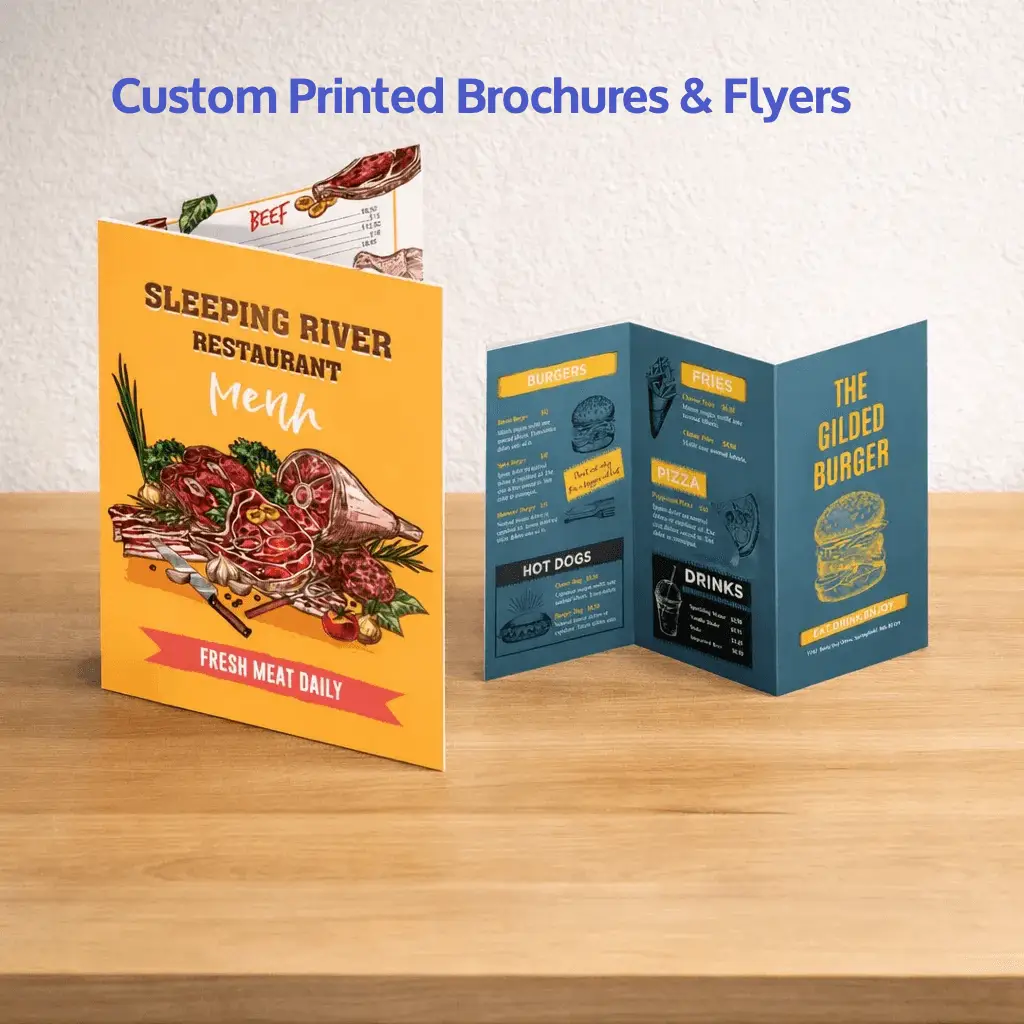
Custom Printed Brochures & Flyers
High-quality, full-color brochures designed to tell your brand's story. From trade shows to takeout menus, we make your message stand out.
Request a free quote

Have questions? Call us at 828-764-3305
Ensure the file matches the product's required dimensions.
Make sure that all images are embedded, and that all the text is outlined.
- Use the CMYK colorspace (Cyan, Magenta, Yellow, black). These are industry standard printing colors. CMYK colors are different than RGB (Red, Green, Blue), which are used to display colors on your screen.
- Use a minimum resolution of 300 dpi for image files.
- Specify trim area with crop marks. (Don't place crop marks inside the work area.)
- Artwork should have 1/8" (0.125") bleed extending past the trim line. This is to prevent minor cutting variations from leaving unintended results at the trim edge.
- Safe Area is the 1/8" (0.125") area inside the trim line. Do not put critical information or images within the Safe Area. This is to prevent minor cutting variations from leaving unintended results at the trim edge.
- If you want printed borders, they must be placed a minimum of 1/8" (0.125") inside the trim line and include bleed. This is to prevent minor cutting variations from leaving unintended results at the trim edge.
Download Templates
Paper Options for Brochures & Flyers
Choosing the right paper can make a big difference in how your brochure or flyer looks, feels, and performs. Highridge Graphics offers a variety of text and cover-weight stocks ranging from natural uncoated papers to vibrant gloss and premium matte finishes.
70# Uncoated Smooth Text
A smooth, non-gloss paper with a natural professional appearance. Colors print softer than on coated stocks, while text remains easy to read.
Best for: Informational brochures, newsletters, menus, forms, handouts, and marketing pieces where a clean, writable surface is preferred.
70# White Linen Text
A premium uncoated paper featuring a subtle woven texture. Linen stock adds an elegant, distinctive feel while maintaining excellent readability.
Best for: Upscale brochures, professional presentations, invitations, programs, menus, and specialty marketing materials.
70# Matte Text
A smooth coated paper with a low-glare matte finish. It provides sharper images and richer color than uncoated paper without the shine of gloss.
Best for: Corporate brochures, product information, real estate brochures, menus, educational materials, and text-heavy marketing pieces.
80# Gloss Text
One of our most popular brochure stocks. The glossy coating produces bright colors, sharp photographs, and a polished professional appearance while remaining flexible for folding.
Best for: Tri-fold brochures, sales brochures, restaurant menus, promotional flyers, travel brochures, and photo-heavy marketing materials.
100# Gloss Text
A heavier, more substantial gloss text stock that provides a premium feel while still remaining flexible enough for many folded brochures.
Best for: High-end brochures, product sheets, promotional flyers, menus, event programs, and marketing pieces where extra weight and durability are desired.
80# Gloss Cover
A sturdy cardstock with a bright glossy finish. It provides more rigidity than text-weight paper and creates a substantial, durable marketing piece.
Best for: Heavy-duty flyers, menus, sales sheets, presentation pieces, and premium brochures. Scoring is recommended when folding to help produce a clean fold.
100# Gloss Cover
A heavier gloss cardstock with excellent rigidity, durability, and vibrant color reproduction.
Best for: Premium flyers, menus, product sheets, promotional handouts, and specialty brochures that need a heavier feel. Scoring is recommended for folded pieces.
13pt Matte Cover: A thick cardstock with a smooth, non-glare matte finish. It provides a substantial premium feel while keeping text easy to read and colors rich and professional.
Best for: Premium flyers, menus, sales sheets, presentation inserts, and specialty marketing pieces. Because of its thickness, scoring is recommended for folded applications.
Not Sure Which Paper to Choose?
For most full-color brochures, 80# Gloss Text is an excellent all-around choice. For a more upscale feel, consider 100# Gloss Text. If you prefer a softer, non-reflective appearance, 70# Matte Text is a strong option. For heavier flyers or premium marketing pieces, choose one of our cover-weight stocks.
Paper samples are available upon request if you’d like to compare the look and feel before ordering.
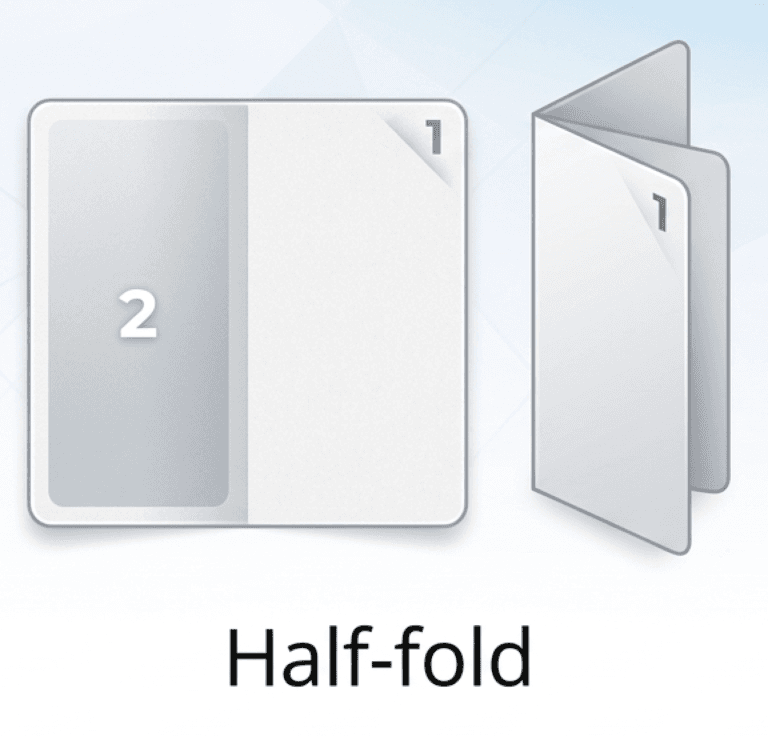
The Half-fold (also called a Bi-fold) is the simplest and most common fold in the printing world. It involves folding a single sheet of paper once down the center, creating four printable surfaces (front cover, two inside panels, and a back cover).
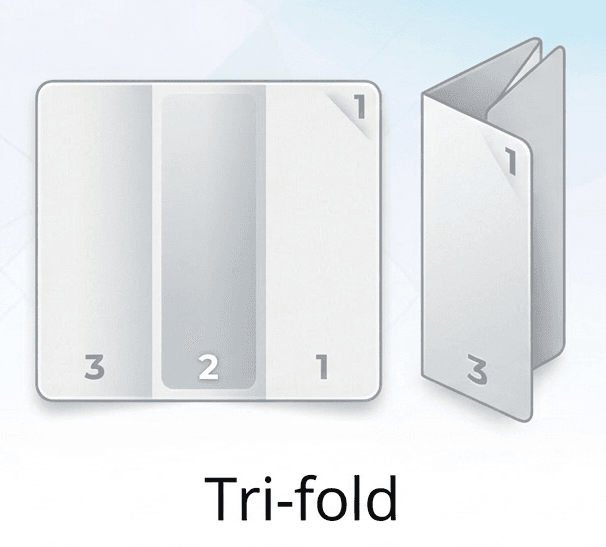
The Tri-fold is the industry standard for marketing brochures. It is created by folding a sheet of paper twice to create three equal-sized panels that tuck into one another. It fits perfectly into standard #10 envelopes and literature racks. This makes it the go-to choice for direct mail and retail displays.
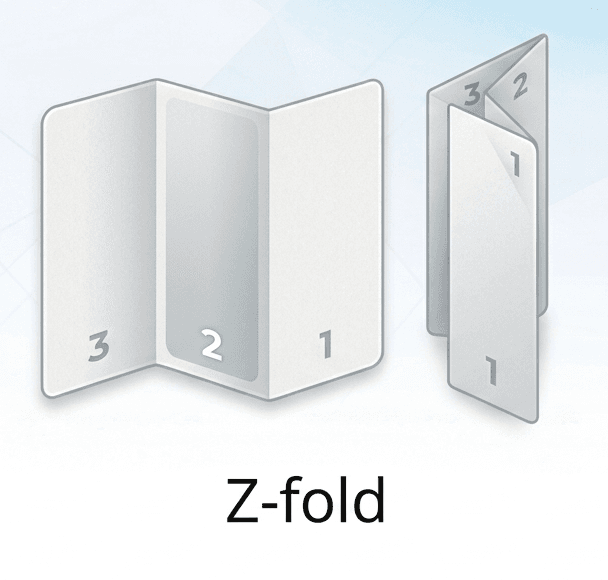
Unlike a tri-fold, which tucks inward, the Z-fold opens out like a fan. It fits perfectly in standard envelopes and is often used for invoices or quick informational handouts.
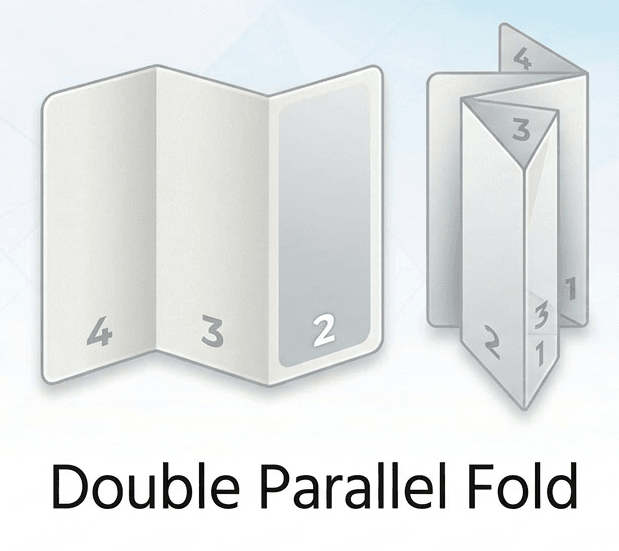
The Double Parallel Fold is a more complex folding method that creates a compact, high-impact marketing piece. It is created by folding a sheet of paper in half and then folding it in half again in the same direction. This fold is less common than the tri-fold, giving it a more premium, custom look.
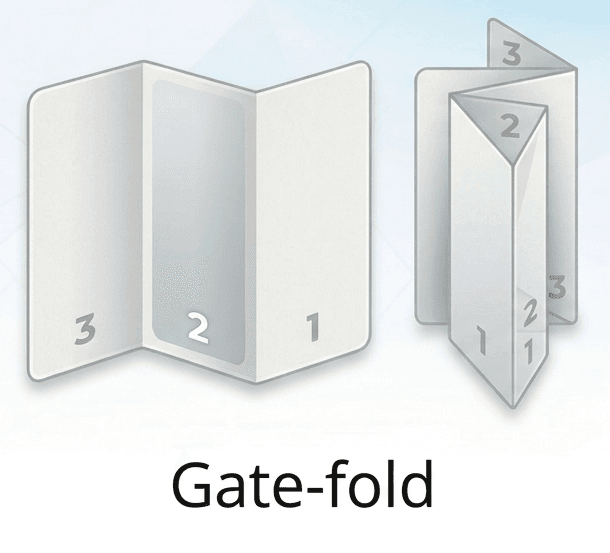
The Gate-fold is a high-impact, presentation-style fold where the left and right sides fold inward to meet in the middle without overlapping. Because it opens like a set of double doors, it creates a sense of ceremony and excitement, making it perfect for high-end marketing or "unveiling" a new project.
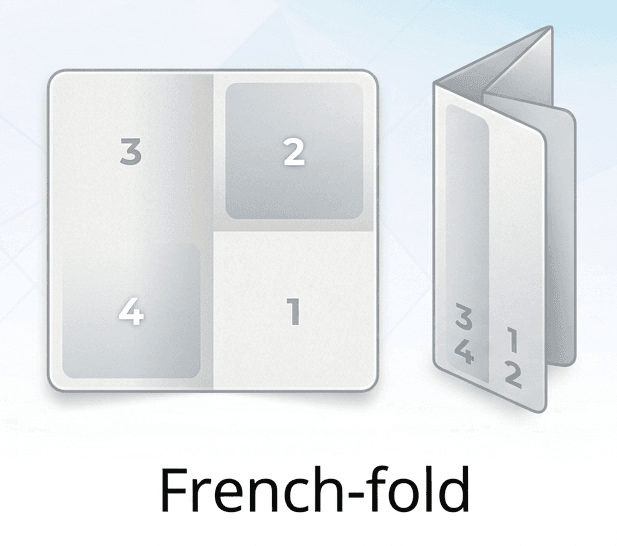
The French-fold (also known as a Right-Angle fold) is a unique, sophisticated folding method where a sheet of paper is folded in half in one direction and then folded in half again at a 90-degree angle. This fold creates four panels of equal size on each side. When fully opened, it reveals one massive, continuous sheet, making it a favorite for posters or hidden maps.
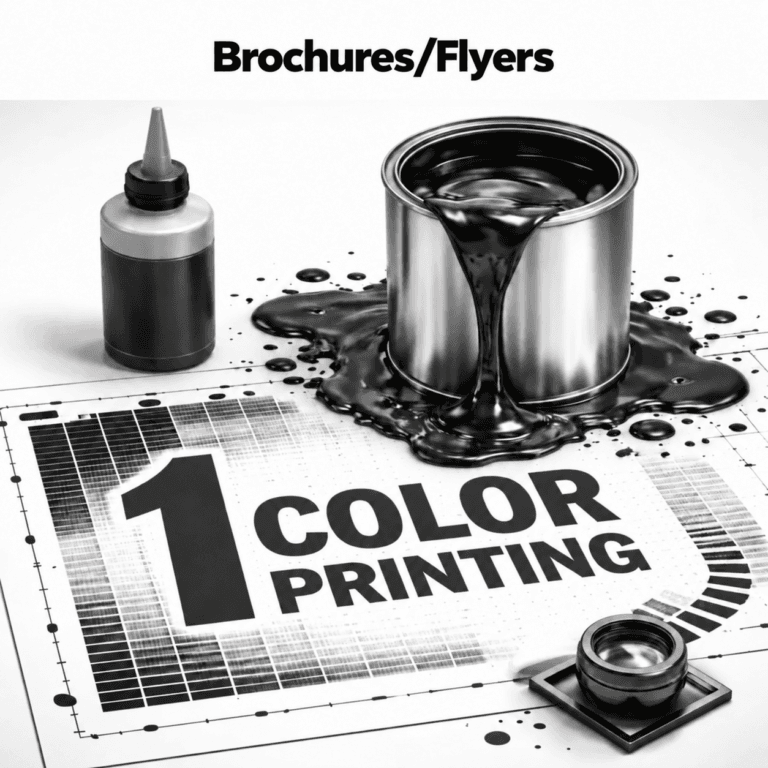
1 Color Ink Printing:
In professional printing, 1-color printing refers to a process where only a single, pre-mixed ink is used to create an image. Unlike CMYK, which mixes colors on the page, 1-color printing uses a specific ink color—often referred to as a Spot Color.
Why Choose 1-Color Printing?
- Budget-Friendly: It is typically the most economical option for high-volume items like envelopes, business forms, or simple promotional flyers.
- Brand Consistency: Many brands use a single spot color for their logo to ensure it never varies, avoiding the slight shifts that can happen in 4-color process printing.
- Specialty Inks: 1-color printing allows for inks that CMYK cannot replicate, such as true metallics (gold, silver) or neon/fluorescent colors.
- Cleanliness: Fine lines and small text are much sharper because they are printed with one solid plate rather than four overlapping plates.
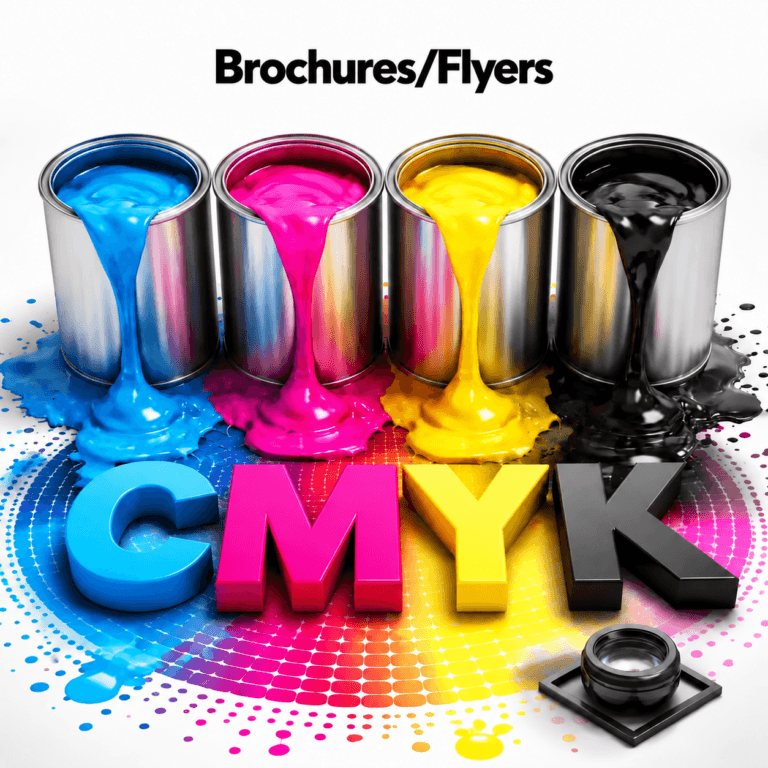
Full Color (CMYK) Printing
In the professional printing industry, Full-Color Printing—also known as 4-Color Process or CMYK—is the standard method for reproducing high-quality, photographic-style images. Instead of using thousands of different colored inks, this process relies on just four primary ink colors to create a near-infinite spectrum of shades.
The Four Essential Inks
The “CMYK” acronym stands for the four specific ink colors used on the press:
- Cyan (C): A vibrant blue-green.
- Magenta (M): A deep, purplish-red.
- Yellow (Y): A bright, standard yellow.
- Black (K): Known as the "Key" color. It is used to add depth, contrast, and fine detail that the other three colors cannot achieve on their own.
Why Use Full-Color Printing?
- Photographic Realism: It is the only way to accurately reproduce photographs and complex illustrations with subtle shading.
- Production Efficiency: It allows a printer to run many different jobs at once using the same four ink reservoirs, making it highly cost-effective for brochures, postcards, and catalogs.
- Standardization: Because CMYK is a universal language, a design created in a program like Adobe Illustrator or Canva can be printed with consistent results across different professional print shops.
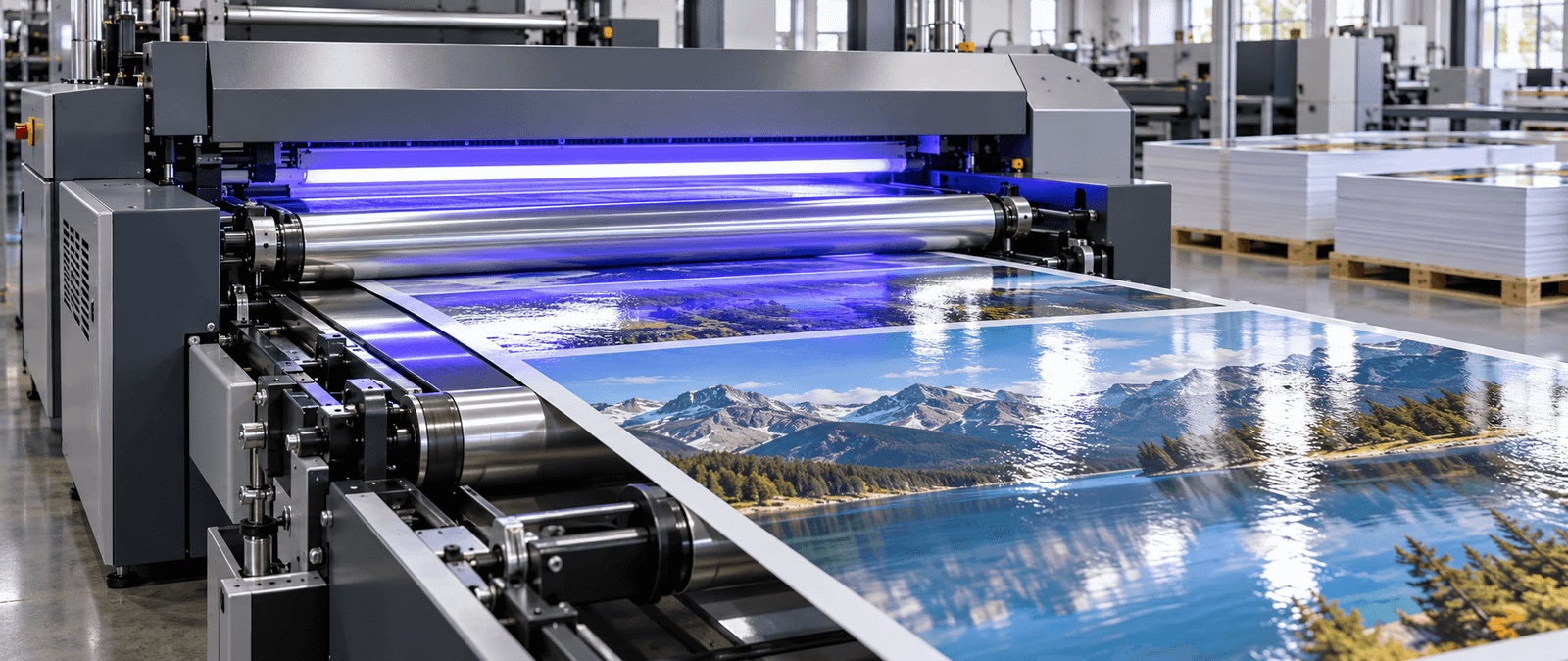
UV Coating:
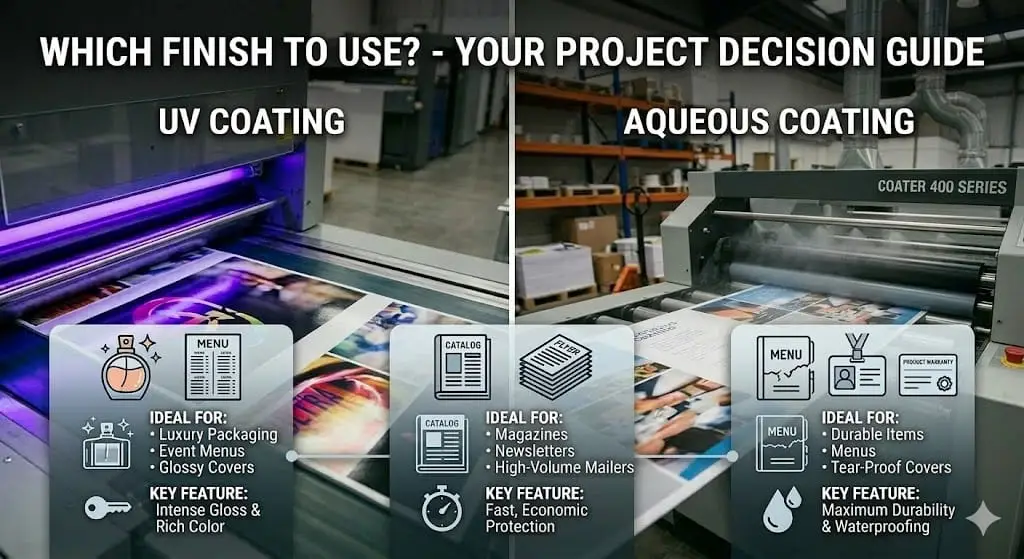
UV coating is a liquid, clear compound applied to printed paper surfaces and cured almost instantly using ultraviolet light. It is one of the most popular finishing techniques in the printing industry because it provides a significantly higher level of gloss and protection compared to standard aqueous coatings or varnishes.
What Does It Do?
- Creates High-Impact Shine: UV coating can produce an extremely "wet" look, making colors appear more vibrant, rich, and saturated. It is often used on postcards, book covers, and brochures to create a premium feel.
- Provides Superior Protection: Once cured, the coating acts as a tough, plastic-like shield. It is highly resistant to:
- Scuffing and scratching during shipping.
- Fingerprints and smudging from handling.
- Moisture and chemicals.
- Allows for Spot Finishing: Unlike some laminates, UV coating can be applied to the entire page (Flood UV) or just to specific areas (Spot UV). This allows you to highlight specific design elements—like a logo or a photo—by making them shiny while the rest of the page remains matte.
- Increases Durability: It adds a layer of thickness and "snap" to the paper, making thinner cardstocks feel more substantial and professional.
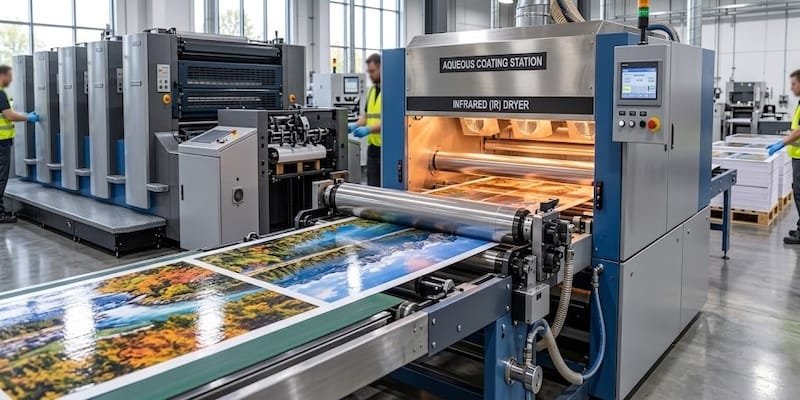
Aqueous Coating:
Aqueous is a water-based coating applied inline while the ink is still wet. It’s thinner than UV and dries with hot air rather than light.
- Best for: Interior pages of magazines, mass-market flyers, and food packaging.
- Why use it: It’s faster and cheaper for high-volume runs. It prevents "set-off" (ink transferring from one sheet to the back of another) without adding the intense glare of UV.
Which one fits your project?
- Use UV Coating if you want a "luxury" feel, high-contrast colors, or want to highlight a specific logo with
- Use Aqueous if you just need a basic seal to keep the ink from smearing on a large mailer or brochure.
Why stop at printing?
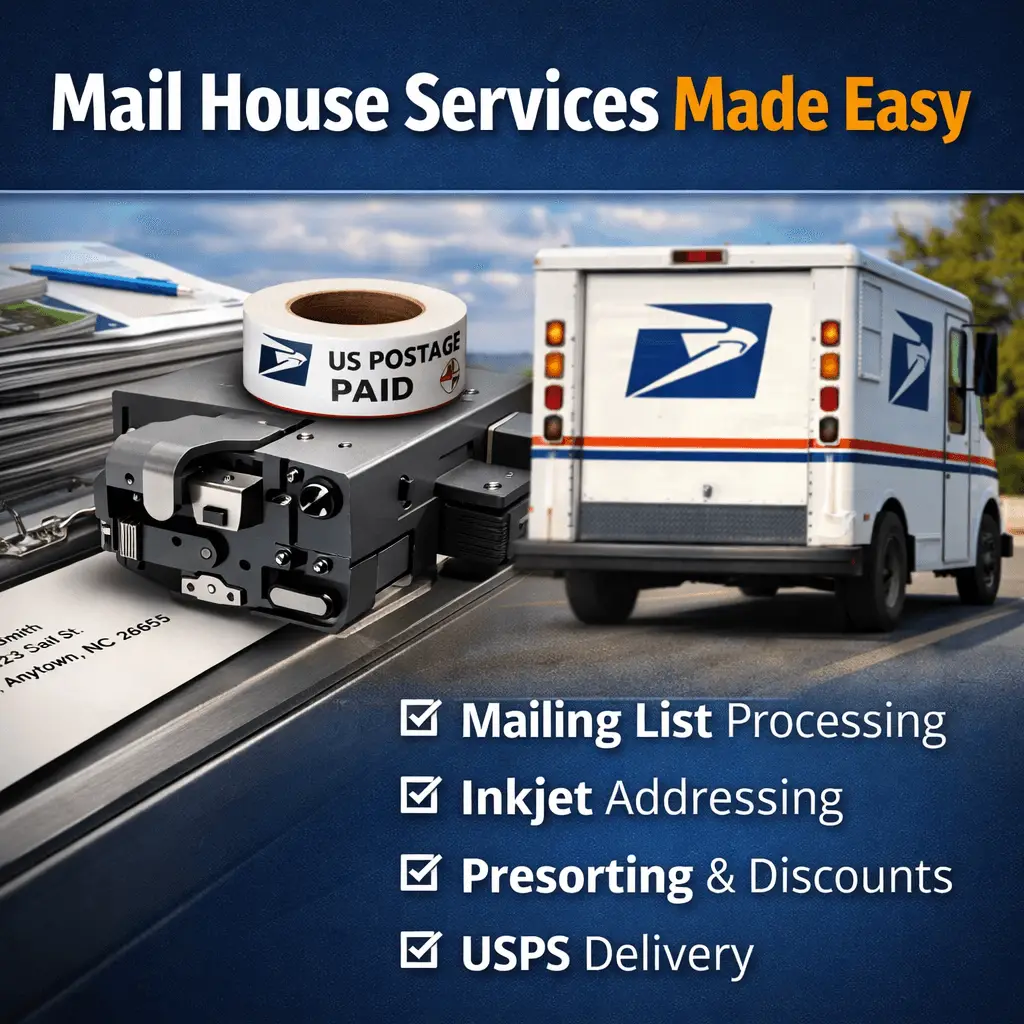
Take your marketing further with professionally printed postcards—delivered straight to your customers’ mailboxes. At Highridge Graphics, we don’t just print high-quality postcards—we can also handle the entire mailing process for you.
What’s Included in Our Mail House Services?
Mailing List Management
We help you clean, organize, and optimize your mailing list to ensure accurate delivery. This includes removing duplicates, correcting addresses, and preparing your data for processing.
Addressing & Variable Data Printing
Each postcard or mail piece is personalized with recipient addresses using high-speed inkjet or digital printing. We can also incorporate variable data such as names, promotions, or unique offers.
Sorting & Presorting for Postal Discounts
We organize your mail according to USPS requirements to qualify for bulk mailing discounts. Proper presorting helps reduce postage costs and speeds up delivery.
Postage Handling
We calculate and apply the correct postage for your project. Whether it’s First-Class, Standard Mail, or EDDM, we ensure your mail is processed efficiently and cost-effectively.
Bundling & Preparation
Mail pieces are grouped, bundled, and labeled according to postal regulations. This step ensures your mail is accepted quickly by the post office without delays.
Delivery to USPS
We transport your completed mailing directly to the appropriate USPS facility, ensuring timely entry into the mail stream.